Your Worst Nightmare Concerning Samsung Fridges Bring To Life


Samsung Fridges - Show Off Your Kitchen Style
Samsung refrigerators are designed to showcase your kitchen's style. They have clever features that keep you busy and well-organized.
SmartThings is a free app that allows you to control your fridge using Wi-Fi. Easily change the fridge's temperature and make use of the FlexZone compartment as an deli, wine, beverage, or soft freeze zone.
The Family Hub
The Samsung Family Hub refrigerator's 21-inch touch screen makes it the command center of the kitchen. Its apps offer a method to manage grocery lists and calendars as well as logging household and food inventory, and storing memos for family members. They also provide entertainment via music apps (Spotify and iHeartRadio for instance) as well as a method to look inside the fridge without opening it, thanks to the built-in cameras in the fridge.
In addition to a myriad of features, Family Hub refrigerators can be used as a smart home control, connecting to your Wi-Fi and allowing you to control other Samsung smart devices, such as SmartThings connected ovens, hobs and range hoods. Samsung's app lets you start and manage the appliances from anywhere, as long as there is an internet connection.
This feature isn't available on all models of the Family Hub refrigerator. Some models do not include a camera that can be used to enable the View Inside feature, while others do, but only support one or two cameras at the same time.
We found it to be a useful app for reducing food wastage and maximising the capacity of the refrigerator. We utilized the app to set reminders for eating leftovers, and to track expiration dates for the items in our fridge. The cameras on the fridge allowed us to quickly and easily make grocery lists to ensure that we don't miss anything important during our next trip.
Family Hub refrigerators have other clever features that help them stand out from the other refrigerators. They include an automated morning briefing, which includes news and information, as well as a voice-controlled browser. The fridge also features an integrated speaker that can play music and podcasts as well as a variety of other audio content. It's a fun feature but it doesn't have the audio quality of a dedicated Bluetooth speaker.
The main drawback of the Family Hub fridge is that it's expensive however there's plenty to like about this fridge. It's one of the best-designed smart fridges on the market and comes with a broad array of features that make it worth the price, even for families who aren't planning to make use of all the features.
The Freezer
Samsung's most innovative and daring attempt to sell us on smart fridges is the Family Refrigerator. The fridge is more contemporary than any other model on the market because of its 21.5-inch touchscreen, with apps, an inventory-watching camera inside the door and the sleek, attractive stainless-steel look. It's also expensive -- starting at $5,600, or $6,000 for a counter-depth model that has more capacity.
The Family Hub can do just about everything you'd want to do with a fridge such as stream music and manage your calendar or grocery list. The lack of SmartThings integration, its overly-many apps, and its lack of voice control seem like missed opportunities. The interior isn't as spacious as premium French doors and even with the additional capacity for ice.
When shopping for a fridge, you should also consider the amount of energy that it will use over its lifetime. This includes the energy that is embodied in the raw materials, the energy required to make it, and any additional gas or electricity it will use while running in your home. We have done some research and found that Samsung refrigerators generally are more efficient than a typical refrigerator.
You can also get a sense of how much energy a refrigerator consumes by looking at its ENERGY Star ratings. This will tell you the percentage it consumes each year. It's important to keep in mind that ENERGY STAR only is available to refrigerators that meet the highest standards of energy efficiency. Even the "high-efficiency refrigerator" will consume more power than a refrigerator that doesn't. It's essential to conduct some research before purchasing a refrigerator.
The French Door
The Family Hub fridge is Samsung's latest, and perhaps most daring, attempt to sell consumers on the concept of a smart fridge. It adopts the French door build that's now commonplace in modern refrigerators, and then adds the 21.5-inch touchscreen loaded with apps and cameras inside that keep watch over your food inventory and is offered with a stylish black stainless-steel look. It's also, in my opinion, the most expensive refrigerator on the market (though it's not necessarily the largest -- that distinction goes to the company's chef-focused Collection fridge which starts at $5,500).
The refrigerator is futuristic in appearance but it doesn't seem like a complete change from the way we've always used fridges. The refrigerator has always served as an essential town post for families with busy schedules. It was used to store calendars, to-do list, and report cards, to remind us of soccer practices or simply note what we needed to buy.
Samsung's app has many of the same features that you'd expect to find on smartphones, and while the touchscreen is a huge improvement over the slow and unresponsive ones found on earlier smart fridges however, it's still pretty limited in terms of what you can do using it. The apps are mostly designed to monitor your food inventory and set timers. However, it's difficult to not be disappointed Alexa isn't there.
While Samsung doesn't offer an official breakdown of where their products are assembled, based on the fact that they have four chip fabrication centers in South Korea and one in Austin, Texas, it's probably safe to assume that most of the fridges are made overseas (Manufacturing-Centers). That means that over the course of its entire life, energy from the sun is being used to produce the raw materials needed to create the fridge, and after that the energy generated by the sun is consumed to transport manufacturing, operate, and recycle it.
Smart refrigerators are more efficient from a carbon footprint perspective than traditional refrigerators since they require less gas and electricity to cool their contents and run the internal systems. This is due to smart refrigerators being more efficient in their use of natural resources. They are also designed to conserve energy when they're not being used.
The Bespoke
This customizable Samsung refrigerator is a fantastic alternative if you're looking to spend around $3000 on a refrigerator. It will showcase your taste in the kitchen. With removable colored panels that can be changed at anytime it's an ideal choice for those who want a fridge that will match the style of their home. The fridge isn't worth the price if you require more advanced functions.
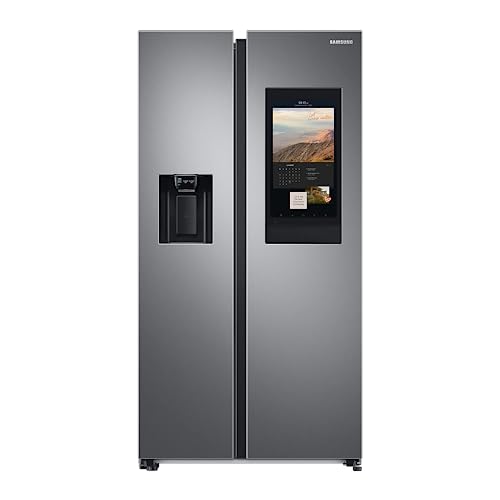
Smart refrigerators can connect to internet via Wi-Fi. This allows you to see inside your fridge without opening the door. remotely check if the doors are closed, and determine if there is an issue with the appliance. They also help conserve energy. And many come with built-in coffee makers and ice machines to help you save even more.
These appliances are designed for energy conservation and come with ENERGY STAR Certification and SmartThings, which allows you to monitor and manage the power usage of your fridge from an app on your smartphone. You can also set up an alarm to remind you to shop for groceries or take food out for the trash.
Samsung Family Hub fridges have touchscreens that are similar to smartphones. You can make shopping lists and search for recipes and much more. You can also use the app to watch TV on your Samsung smart TV, but a Wi-Fi connection and Samsung account are required.
samsung refrigerator can also be used to manage your digital calendar and leave notes for family members or housemates. You can also connect the Samsung fridge to the Samsung SmartThings system, so that you can see what's inside from anywhere.
The touchscreen can be challenging. It's not as responsive as smartphones and its ability to draw and type frequently being a struggle. It is also limited in its touch resolution. The huge bezel on the screen can make it hard to accurately select a button.
The Family Hub refrigerator has many eco-friendly features. Its ENERGY STAR rating means it's rated to consume less than half of the typical household refrigerator's power. This is due to its lower energy consumption and more efficient refrigeration system. The energy that the fridge embodies is also relatively low, meaning that it doesn't require as large a supply of raw materials or natural resources to manufacture.